NOTES / VISUALS BY MARIUS

NOTES

Fragments of thought. Observations without conclusions.

18 OCTOBER 2026 · ON FINDING A PLACE

Finding a Place for What I See

For a long time, my photographs simply existed.

They lived on hard drives, in folders, among memories of places I had visited and moments I had noticed. I would return to them occasionally, look at them, sometimes work on them, and then leave them there.

I never really had a plan for what to do with them.

I was always more interested in going somewhere new. Walking through unfamiliar streets, watching people, discovering the way light falls on a building or how an ordinary scene suddenly becomes something worth remembering.

There was always another city to visit, another journey to take. And somehow, spending time and money on creating a place for my photographs never seemed quite as important as going out and finding new ones.

Perhaps I simply wasn't ready.

But recently, something changed.

The photographs that had existed separately for so long began to find their place together. They became collections, stories, fragments of a larger picture. And suddenly, I could see something I hadn't quite seen before.

Not just individual photographs, but a way of looking at the world.

It felt a little like discovering that a painting I had kept somewhere in a corner had finally been placed in the right frame.

The painting hadn't changed. But somehow, I could see it differently.

And I found myself unexpectedly happy.

Not because I had created something grand or important. Not because I suddenly considered myself a photographer.

But because something that had been part of my private world had finally taken a visible form.

What makes me happiest is that I don't have to choose between experiencing the world and finding a place for what I see.

I can still travel. Walk without a destination. Get lost in a city. Stop for no obvious reason. Notice something that perhaps nobody else would notice.

And when I return, those moments no longer have to disappear into another folder.

They have somewhere to belong.

Perhaps that is all I ever wanted.

Not to become someone else.

Just to give the things I see a place of their own.
OPENING NOTES · OCTOBER 2026

The first collection of observations, published together when this space began.

ON THE UNEXPECTED

A Small Step for Man, a Burger for Lunch

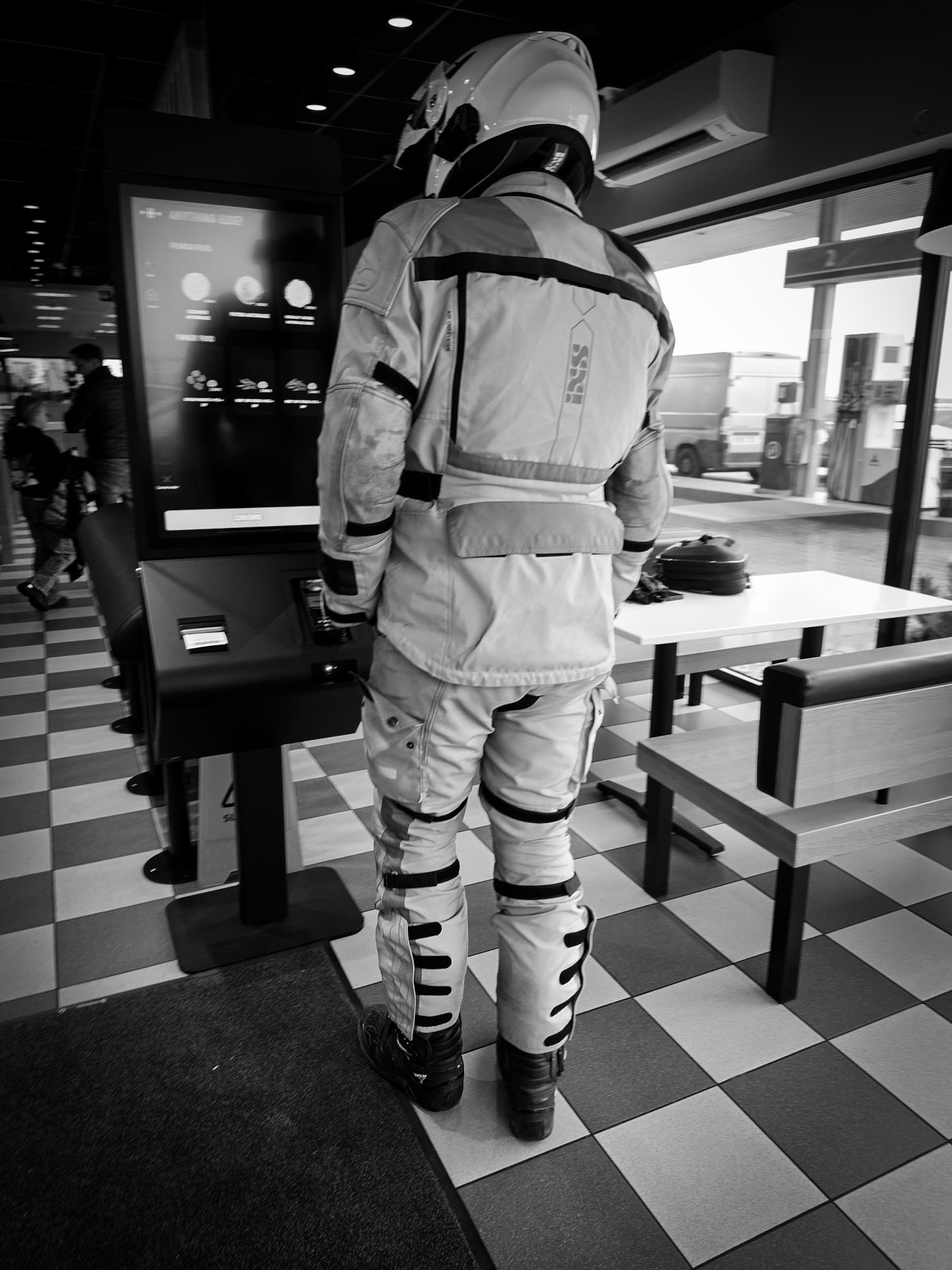
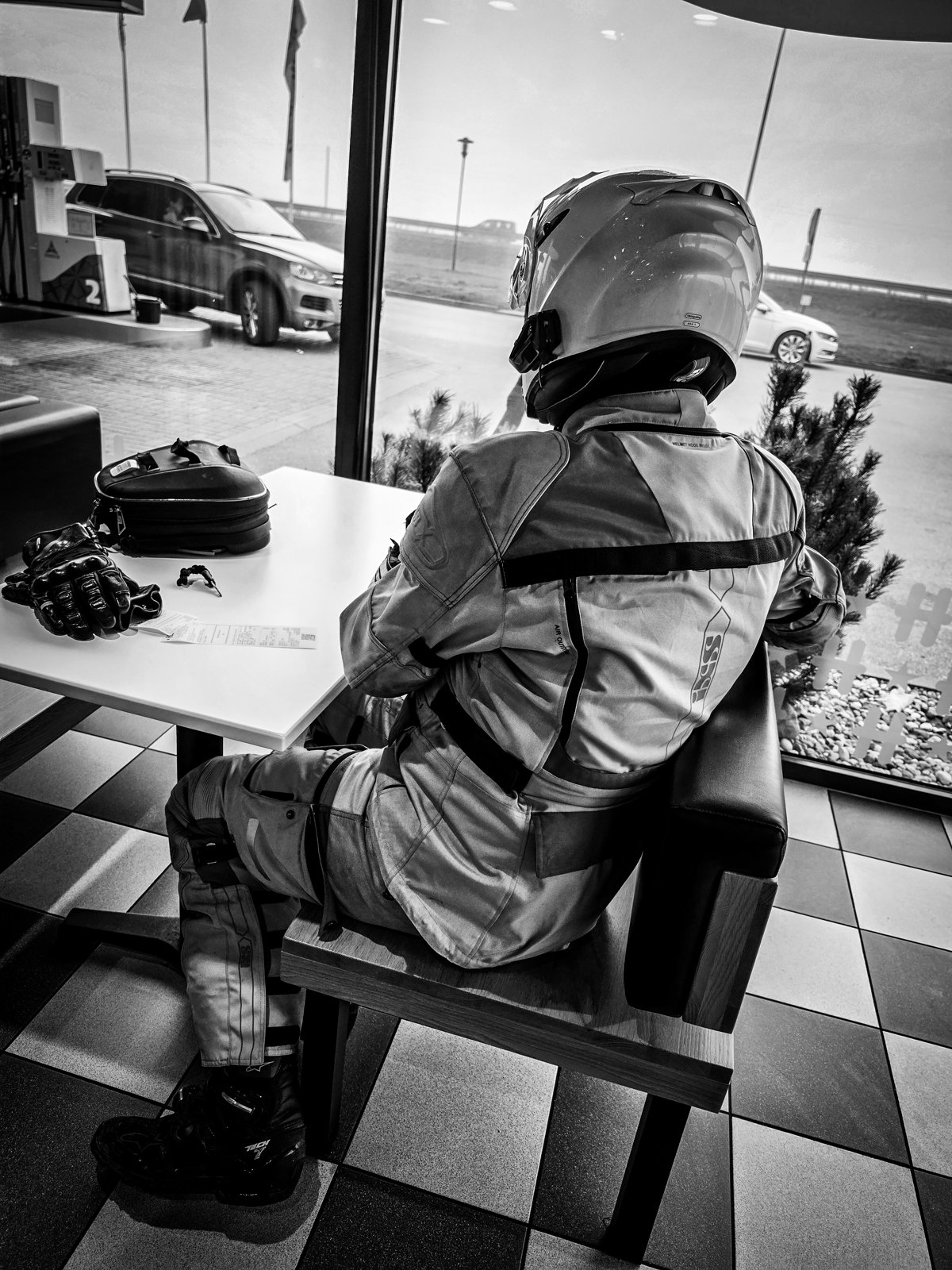
For a brief moment, I thought an astronaut had landed at a roadside restaurant.

There he was, dressed for what looked like an expedition into another world, quietly sitting by the window. No spacecraft in sight. No mission control. Just a table, a touchscreen ordering machine, and the perfectly ordinary business of getting something to eat.

Of course, he was a motorcyclist.

Motorcyclist in protective gear seated at a roadside restaurantMotorcyclist standing at a restaurant ordering screen

But I liked the other version of the story.

I found myself wondering where he had parked his spacecraft. And whether, after travelling all that distance, he had discovered that even on Earth, you still have to order your own lunch.

Sometimes the most entertaining things happen when reality briefly resembles something it isn't.

Nothing extraordinary happened that morning.

Except, perhaps, a small interplanetary misunderstanding.

ON SHARING

What I Never Intended to Show

For a long time, my photographs were simply mine.

They belonged to walks, journeys and moments when I wanted to step away from the ordinary demands of life. I did not think much about showing them to anyone, and I certainly did not feel the need to call myself a photographer.

I still do not.

I am someone who observes. The camera is one way of giving that habit a form.

At some point I began to wonder what it would mean to let these images leave the private space in which they had lived. Not to prove that they were important, or that I had become particularly skilled. Just to allow someone else to look.

That is a slightly uncomfortable thing to do. Once a photograph is shared, I no longer control what another person sees in it. They may notice something I never intended. They may feel nothing at all.

Perhaps that is part of the point.

This website is not a declaration of professional identity. It is a small collection of things that made me stop.

I thought it was time to open the door.

ON CHANCE

An Arrangement That Will Never Return

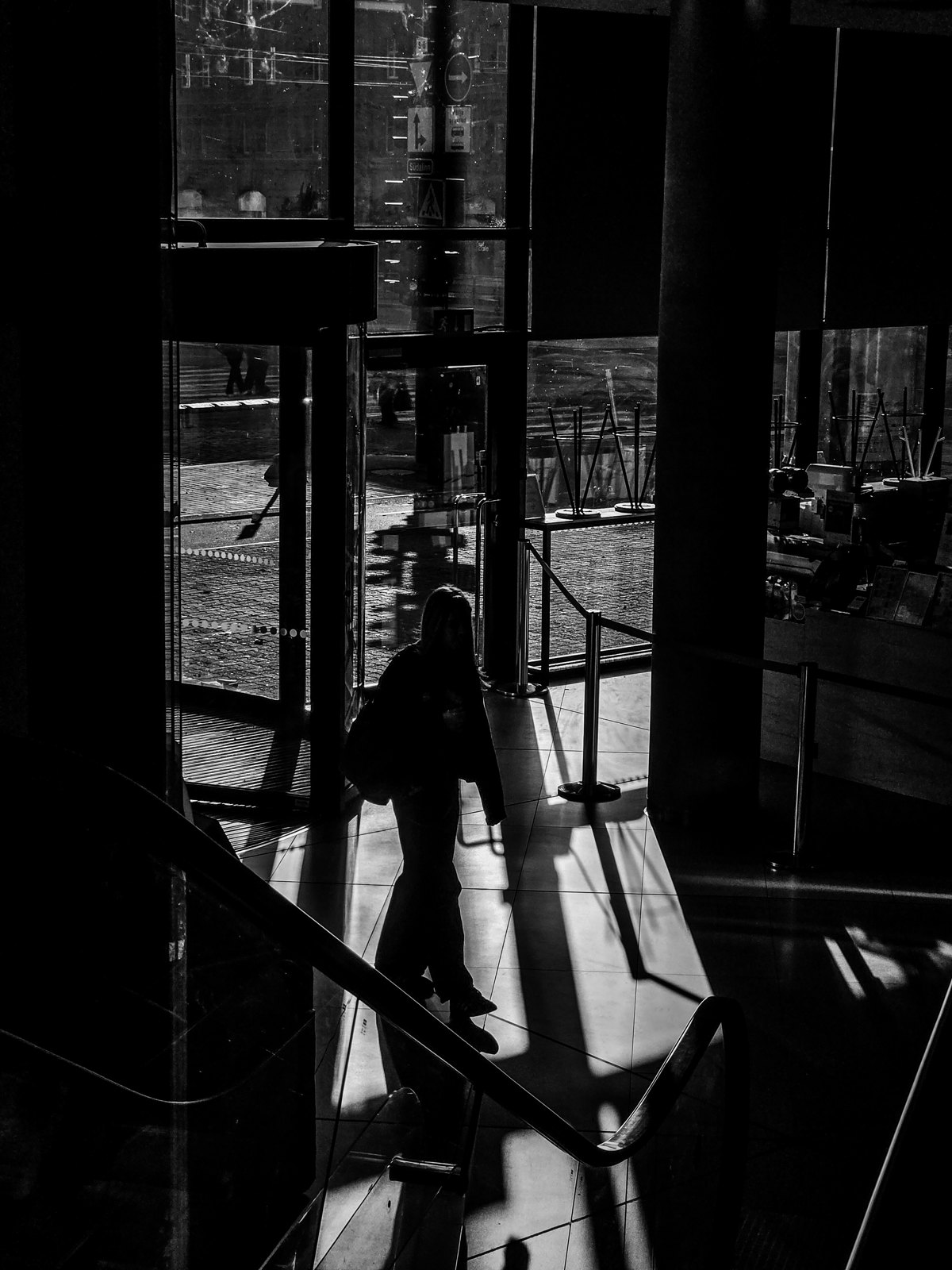
I am fascinated by the accidental geometry of everyday life.

A person stops beside a wall. Someone else crosses the square. For a second, their positions seem to belong together, as though the city had arranged them deliberately.

Then one of them moves, and the composition disappears.

Black and white street photograph by Marius

Nothing important has happened. No one has noticed the arrangement except, perhaps, the person holding the camera.

That is part of what I enjoy about street photography. Buildings may stand in the same place for decades, but the human element refuses to remain still. A few steps can change the entire balance of an image.

Sometimes I am too slow. I see the possibility and reach for the camera just as it dissolves. At other times I press the shutter almost instinctively, and only later understand what drew my attention.

There is no way to reconstruct those moments exactly. Even if the same people returned, the light, the distance and the small coincidences would be different.

A photograph does not stop the world. It only keeps evidence that, for an instant, everything happened to be in that particular place.

ON BLACK AND WHITE

When Colour Steps Aside

The world does not arrive in black and white. I know that.

But when I look at a scene, colour is not always what interests me most. I may notice the edge of a shadow first, or the repetition of windows, or the small human figure that changes the scale of an enormous building.

Removing colour does not make a photograph more truthful. It changes what is available to the eye.

A bright sign becomes a shape. A busy street becomes a collection of lines and tones. Details that once competed for attention begin to settle into a different relationship.

Of course, black and white can also be unforgiving. Without colour to carry the image, there must be something else worth looking at. A photograph that is empty of interest does not become meaningful simply because it is monochrome.

I like that challenge.

For me, black and white is less about nostalgia than about concentration. It gives me a little more room to see the weight, distance and rhythm of things.

Colour has not disappeared from the world. It has simply stepped aside for a moment.

ON STRANGERS

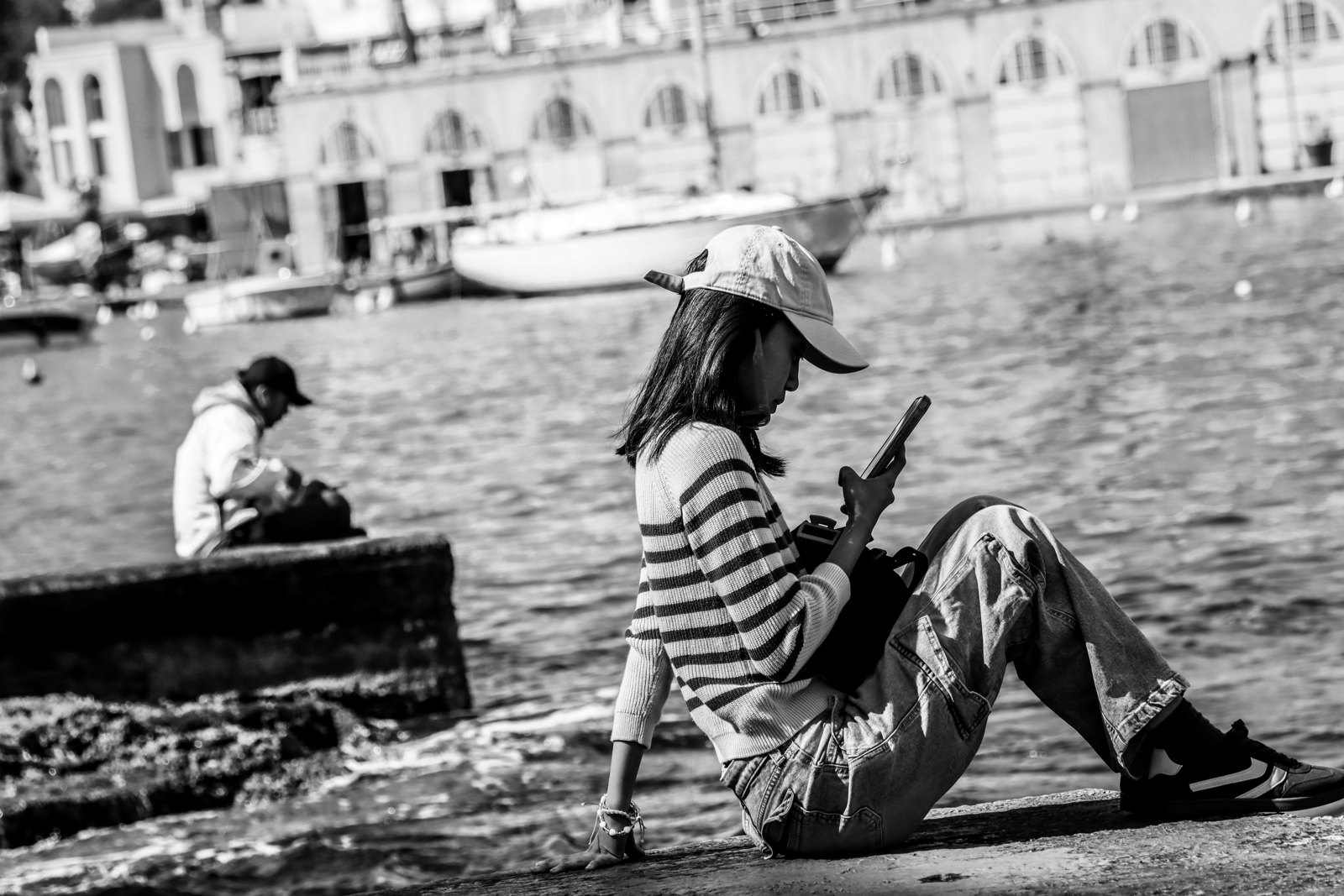
The Distance Between Us

Street photography places me in an unusual position.

I share a space with people I do not know. We may stand a few metres apart, wait at the same crossing or pass through the same doorway. For a brief moment, our paths overlap. Then they separate.

I notice a gesture, a hesitation, the way someone holds a bag or looks through a window. It is tempting to imagine a story. But the truth is that I know almost nothing about that person.

Black and white street photograph by Marius

A photograph can show a moment without revealing the life around it.

I think that distance matters. It reminds me not to confuse what I see with what I understand. A solitary figure is not necessarily lonely. A serious expression does not tell me what someone is feeling.

Sometimes I photograph from across the street, through glass or between the lines of a building. That physical distance seems appropriate to the uncertainty of the encounter.

I can notice. I can frame. I can keep a fragment.

The rest belongs to the person who walked through it.

ON THE CAMERA

The Third Eye

When I travel, the camera is almost always with me.

It has weight. It takes up space. Sometimes I wonder why I insist on carrying it for hours, especially on days when I barely take a photograph.

And yet leaving it behind feels rather like forgetting a part of the journey.

Someone once described it as a third eye. I liked that expression, although I do not think the camera gives me a new way of seeing. The curiosity is already there. The camera simply offers a possibility: that a moment I notice might be kept.

There are days when I look through the viewfinder constantly, and others when I mostly carry it at my side. Either way, I pay attention to the same things: the way light falls across a wall, the shape of a stranger's movement, a peculiar balance between a person and a building.

The strange thing is that the camera can make me look more carefully even when I do not use it.

Perhaps that is why I continue to carry the extra weight. Not because every walk must produce photographs, but because I like the state of attention it brings with it.

ON RETURNING

The City That Took Its Time

I did not particularly like Helsinki the first time I visited.

I cannot even say exactly why. Nothing was wrong with it. Perhaps I was expecting something the city had no intention of offering me.

I returned, and then returned again. Slowly, without any dramatic revelation, something changed. I began to enjoy its quiet streets, the space between buildings, the shoreline and the way the city seemed to hold itself back.

I used to think that a place either spoke to you or it did not. Now I am less certain.

Sometimes we arrive carrying a ready-made idea of what beauty should look like. We want a city to introduce itself immediately, to give us a reason to admire it. But some places do not perform for visitors. They ask for a little time.

I walked along the sea without a plan, listening to the sounds around me and watching people move through the day. I was glad it did not rain. That was enough.

Helsinki had not become a different city. I had simply stopped asking it to be one.

Perhaps the places we come to love are not always the ones that impress us at first sight. Sometimes they are the ones we finally learn how to see.

ON ANONYMITY

The Freedom of Being Nobody

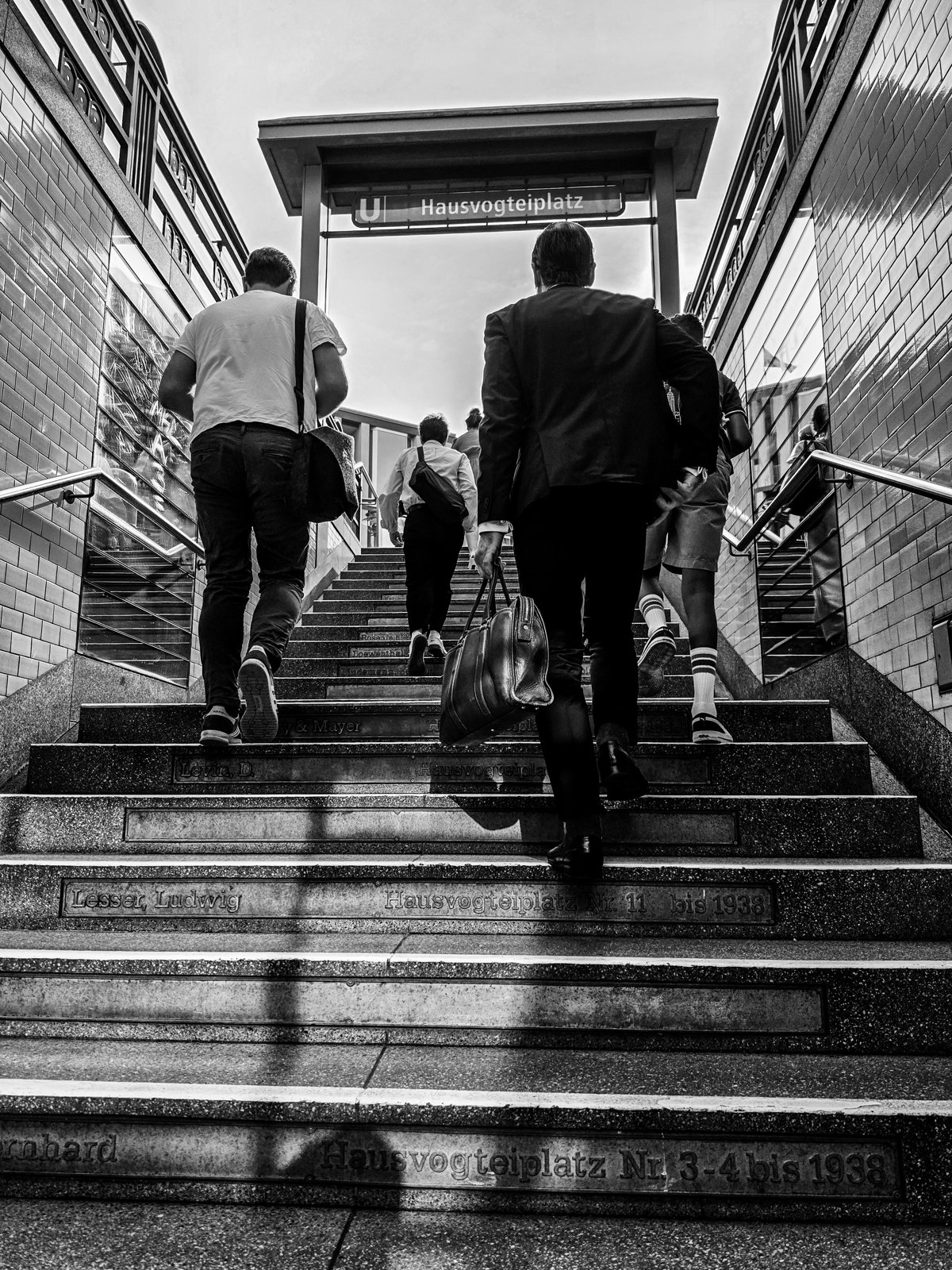
There is a particular freedom in arriving somewhere without being expected.

No appointments. No familiar faces to recognise you. No need to explain where you are going, or why you have stopped in the middle of a pavement to look at a wall.

I like walking through cities this way. Sometimes I follow the water. Sometimes I turn into a street because of the light at its far end. A few minutes later I may have forgotten why I came that way at all.

Black and white street photograph by Marius

Around me, people are occupied with their own lives. They hurry towards trains, carry shopping bags, meet someone, leave someone. I see fragments of their days, but I do not know their stories. And they know nothing of mine.

There is something comforting in that mutual anonymity. For a while, I am not defined by my work, my responsibilities or the expectations of anyone else. I am simply another figure passing through the city.

The camera comes with me, of course. But taking a photograph is not always the point. Sometimes the most valuable part of the day is the time spent looking, with no particular result to show for it.

I can disappear into a crowd and, strangely enough, feel more present.

ON SEEING

Before the Photograph

Sometimes a photograph begins long before I lift the camera.

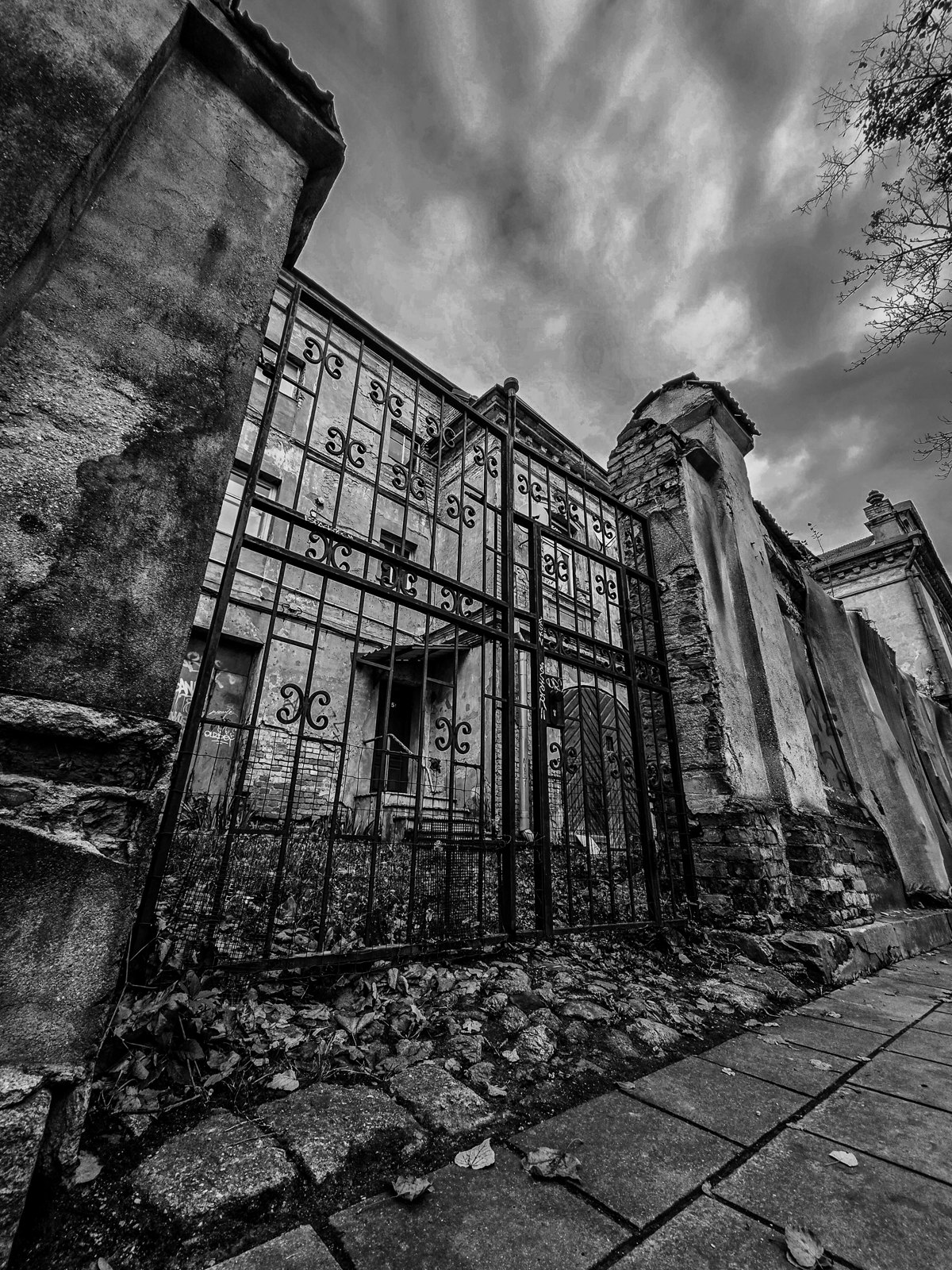
I may be walking through a city without looking for anything in particular. I notice a building, a gate, the shape of the sky above it. At first, there is nothing especially remarkable about the scene. It looks much like it does to anyone passing by.

An old gate seen from a low angle beneath a dramatic sky

But something makes me stop.

I begin to imagine what might happen if I moved a little to one side, lowered the camera, or allowed the lines of the building to rise differently against the sky. The place itself has not changed. Only the position from which I see it has.

And somewhere in that process, an image starts to form in my mind. Not an exact picture, perhaps, but a sense of its geometry, its weight, the tension between light and shadow.

Then comes the attempt to make it visible.

It does not always work. Sometimes the photograph is flatter than I imagined, or the balance I thought I saw is simply not there. But occasionally I look at the result and recognise the image I had already seen in my head.

That is a quietly wonderful moment.

Not because I have transformed the world into something else, but because, for an instant, the way I imagined it and the way it appears in the photograph meet.

Perhaps that is one of the things I enjoy most about observing: discovering how much can change without anything actually moving, except the person who is looking.